Buying Guide
How To Choose A Coffee Grinder: What Makes A Better Home Coffee Setup
Learn how to choose a coffee grinder by comparing grind consistency, noise, size, and everyday value before you buy.
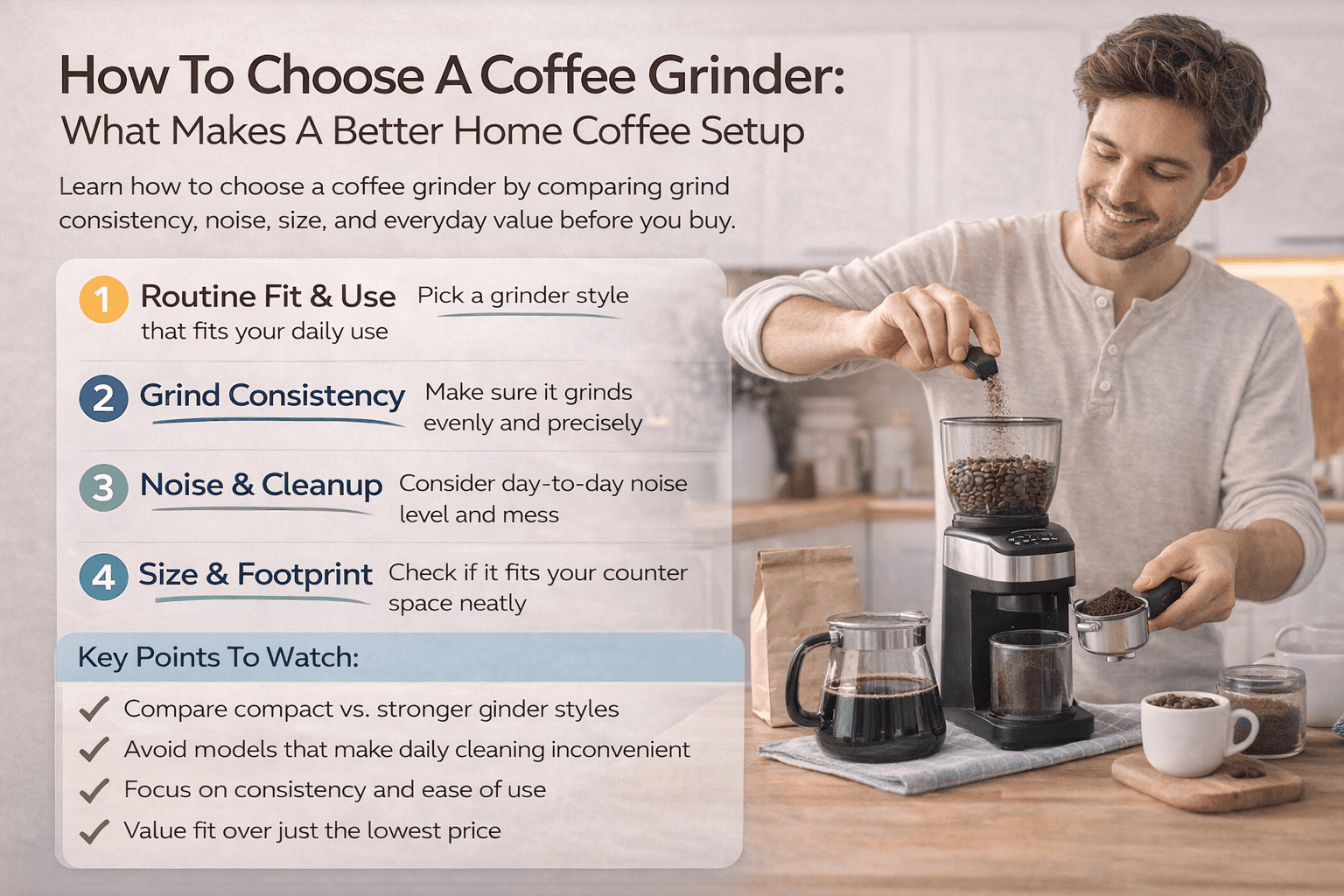
This coffee grinder buying guide is written for shoppers who want a clear path from research into a smarter shortlist, not a random scroll of listings. If you are searching for the best coffee grinder for home use, the real decision is not just which brand is most popular; it is which type of coffee grinder matches the way you actually use it. That means paying attention to whether fresh grinding actually changes your daily coffee routine, noise level, footprint, and mess control, and how much day-to-day friction the product adds or removes in your kitchen. This guide is built to help you compare the right tradeoffs, cut through marketing noise, and move into the best list and review pages with more confidence.
Start With The Routine You Actually Have
The best coffee grinder for one buyer can be the wrong choice for another because home routines vary so much. If you use your coffee grinder every morning or several times a week, convenience and workflow matter more than a long feature list. If your use is occasional, the smartest choice may be a simpler model that still fits your space and budget.
This is why a good coffee grinder guide begins with routine rather than brand. When you are clear about whether fresh grinding actually changes your daily coffee routine, the shortlist gets much smaller and the decision becomes less stressful. That clarity is what separates smart buyers from buyers who end up with a product that feels wrong after a few weeks.
Choose The Right Style Before Comparing Brands
Most shoppers compare brands too early. It is almost always smarter to decide on the coffee grinder style first: compact daily grinders and stronger everyday models. Each style solves a different problem, so picking the right style upfront saves you hours of confusion later.
Once the style is clear, brand comparisons finally make sense. You can then focus on a few realistic finalists instead of bouncing between unrelated product types. That is the cleanest way to move from broad research into review pages that actually help.
Size, Footprint, And Cleanup Shape Daily Use
Listing pages spend a lot of time on features, but real satisfaction often comes from practical details. noise level, footprint, and mess control matters because it determines whether the coffee grinder stays easy to use every day. A machine that feels awkward to refill or clean usually becomes less appealing over time, even if the specs look strong.
Cleanup friction is one of the most common reasons buyers regret a purchase. When choosing a coffee grinder, consider how often you will clean it and whether that cleanup fits your routine. A product that is easy to keep clean tends to get used more, which is the real path to long-term value.
Performance Features That Actually Matter
Not every feature improves real-world performance. consistent grinding and easy daily use are the features that typically matter the most once the coffee grinder is in daily use. If a feature does not solve a real problem in your routine, it is often just marketing.
The goal is not to buy the most complex coffee grinder. The goal is to buy the one that makes your daily routine feel easier and more consistent. That is why a focused review page is more useful than a generic spec sheet.
Value Depends On Long-Term Fit, Not Just Price
Price only makes sense when you compare it against frequency of use. A lower-priced coffee grinder can be a bad value if it creates daily friction or does not fit your routine. A slightly higher-priced option can be smarter if it removes friction you feel every day.
This is why buyers searching for the best coffee grinders are usually looking for value, not just the cheapest listing. If the product saves time, improves consistency, or eliminates a regular annoyance, it often earns the higher price. If it does not, a simpler or cheaper option can be the better decision.
Common Buying Mistakes To Avoid
The most common mistake is buying for an imagined routine instead of the real one. Another is overpaying for features that never get used. A third is underestimating how much noise and cleanup affects long-term satisfaction.
The smartest buyers compare fit first, then compare brand. If the product does not match the job you do repeatedly, even strong reviews will not make it feel right. This is the logic that keeps a coffee grinder purchase from becoming a regret.
How To Build A Smarter Shortlist
After you pick the right coffee grinder style, move into the best list page for this category. From there, open two or three review pages that match your budget and routine. This is faster than scanning random listings because each page answers a different decision step.
That guide to best list to review path is also the best SEO flow. It mirrors how people actually shop and keeps buyers moving toward clearer decisions. The best grinder shortlist includes one value option and one stronger option so you can compare price with real routine payoff.
What To Read Next Before You Buy
Open the coffee gear shortlist, then the grinder review page if you want a clear, low-friction first grinder. If two models still feel close, open the comparison page to settle the final decision. The best coffee grinder is rarely the one with the loudest listing; it is the one that fits the routine you actually live with.
Frequently Asked Questions
How do I choose the right coffee grinder for my home?
Start with routine, then compare size, cleanup, and whether the coffee grinder solves a repeated problem in your kitchen.
Is a more expensive coffee grinder always better?
No. It is only better when the added cost removes real friction or improves a routine you repeat often.
What should I read after this guide?
Open the best-list page first, then review two or three finalists that match your routine and budget.